

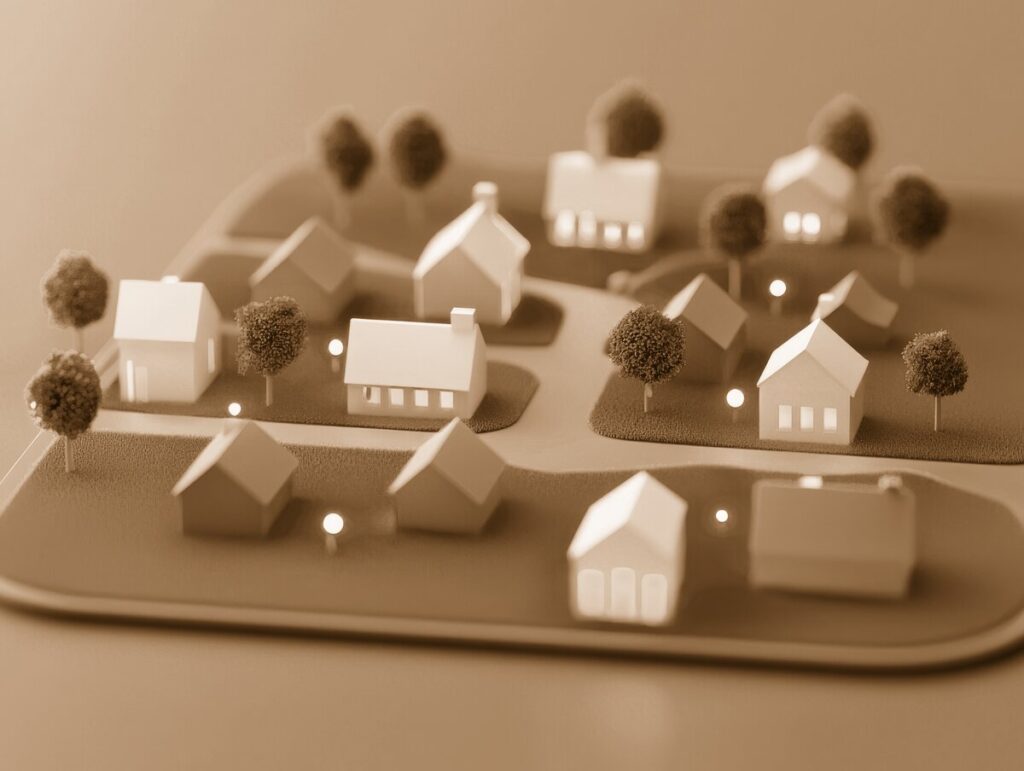
Nestled in the heart of the ever-growing town of Morrisville, Addison Park stands as a testament to the careful blending of heritage, progress, and the warmth of community spirit. While Morrisville itself has a rich history dating back to the mid-1800s, Addison Park’s story is a unique thread running through the town’s larger tapestry—a story of vision, connection, and enduring neighborhood pride.
Origins of Addison Park
Addison Park, situated just east of NC-54 and bordered by Morrisville Parkway and Town Hall Drive, was not always dotted with beautiful homes and friendly cul-de-sacs. The land that makes up Addison Park was, for decades, a patchwork of farmland and pine woods on the outskirts of what was once a small railroad town. The area was used primarily by local farmers—many of whom descended from the original families that settled Morrisville in the 19th century.
The neighborhood began to take its current form in the late 1990s, during a period of rapid growth for Morrisville and surrounding Wake County. As the tech industry boomed and the Triangle drew new residents from across the country, developers recognized the value of Addison Park’s location. It offered a peaceful residential setting mere minutes from major highways, RTP employers, and Raleigh-Durham International Airport.
How Addison Park Got Its Name
The naming of Addison Park remains a charming point of neighborhood lore. While official records reflect the developer’s hand in choosing the name, long-time residents like to recall that “Addison” was selected to reflect a sense of addition—of new families, new friendships, and new beginnings. The name also carries a historic flavor, reminiscent of the stately neighborhoods found in larger Southern cities—a subtle nod to the refinement and hospitality the community strives to embody.
“Park” in the name is, of course, no accident. Addison Park was designed from the outset with green spaces as a central feature. The small pocket parks dotted among the homes, and the easy access to Morrisville Community Park across Town Hall Drive, were ideas inspired by historic planned communities in North Carolina and beyond.
Key Historical Milestones
The growth of Addison Park unfolded through several pivotal moments:
- Early 2000s: The first set of homes went up along Addison Avenue and Cheswick Place, swiftly attracting families excited by the spacious lots, tree-lined streets, and proximity to shopping and schools.
- Mid-2000s: The development of the Addison Park HOA (Homeowners’ Association) brought residents together to shape the vision for well-maintained streetscapes, annual events, and social gatherings—traditions that continue today.
- 2010s: As Morrisville itself expanded, Addison Park benefited from the opening of additional local schools, such as Morrisville Elementary and Cedar Fork Elementary. These family-centric features increased the neighborhood’s popularity, and homes along Vernon Ridge Drive and Richmond Run quickly filled.
- Late 2010s to Present: Addison Park embraced change by welcoming an increasingly diverse population, reflecting Morrisville’s transformation into one of the most multicultural towns in North Carolina.
Notable Landmarks and Buildings
Though largely residential, Addison Park is more than just a collection of homes. A few landmarks stand out and serve as anchors for neighborhood life:
- Addison Park Neighborhood Sign – At the entrance along Town Hall Drive, this elegant brick and stone sign, surrounded by seasonal flowers, welcomes residents and visitors alike.
- The Addison Green – A small, lovingly tended park, easy to spot along Addison Avenue, serves as the heart of community gatherings. Each spring and fall, residents gather here for picnics and outdoor movie nights, a tradition spanning nearly two decades.
- Proximity to Morrisville Community Park – While technically just outside the neighborhood’s borders, the expansive Community Park—one of Morrisville’s finest—offers trails, a playground, ball courts, and events that Addison Park families have enjoyed for years.
Addison Park’s Evolution Over the Decades
Addison Park might be a relatively young neighborhood by North Carolina standards, but it has witnessed an extraordinary evolution. In its earliest days, open land and new construction lent it an air of possibility. Today, it is recognized as a mature, vibrant community defined by tall hardwoods, carefully landscaped yards, and neighbors who look out for one another.
Several features highlight this growth:
- Street Identity: Streets like Addison Avenue, Cheswick Place, and Vernon Ridge Drive have inspired block parties and informal watch groups, reinforcing that small-town sense of belonging.
- Community Spirit: The Addison Park HOA spearheads seasonal events, a summer ice cream social, and a winter luminary walk, all of which bring residents together from across cultures and generations.
- Welcoming Newcomers: As Morrisville has changed, so has Addison Park. Home to people from around the world, its streets now ring with myriad languages and traditions, enriching the neighborhood’s heritage far beyond its original boundaries.
- Sustainability and Renewal: New landscaping initiatives and eco-friendly gardening contests reflect the commitment to keep Addison Park beautiful and sustainable for years to come.
What Makes Addison Park Special
At its core, Addison Park’s special quality is its blend of tradition and progress. Residents take pride in their well-maintained homes and the shade provided by the now-mature trees planted at the turn of the millennium. They celebrate the landmarks, both big and small—from the welcoming sign to the festive lights strung across porch rails in winter.
But perhaps the greatest treasure of Addison Park is the sense of community that has endured and deepened across generations and cultures. Here, it’s not uncommon to see neighbors gathering at Addison Green for a birthday party, children cycling safely along Vernon Ridge Drive, or families taking a short stroll to Morrisville Community Park for a Saturday picnic.
In Addison Park, the past is never far from sight—but it’s the shared vision for the future that truly sets the neighborhood apart.